Lazy Clause Generation in C++: 39 of 40 Schedules Proved Optimal vs CP-SAT's 20
Explained Propagation, Minimal-Cover Reasons and Energetic Reasoning; One Thread Each, 20 s, Every Answer Re-Checked.
39/1/0vs CP-SAT, 40 schedules, 20 s
39 vs 20proved optimal
< 0.1 severy n = 20/24 proof
57/60XCSP 2024 instances parsed
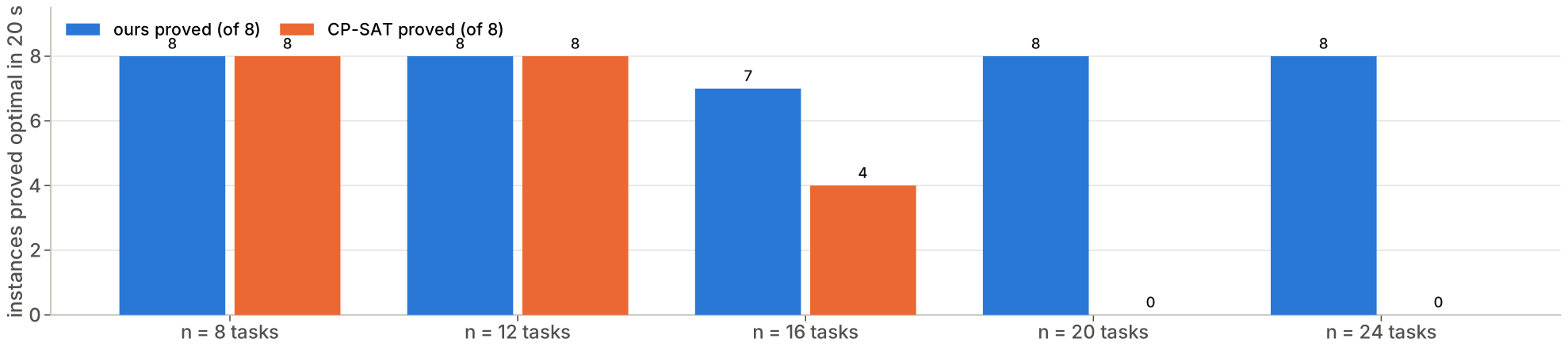
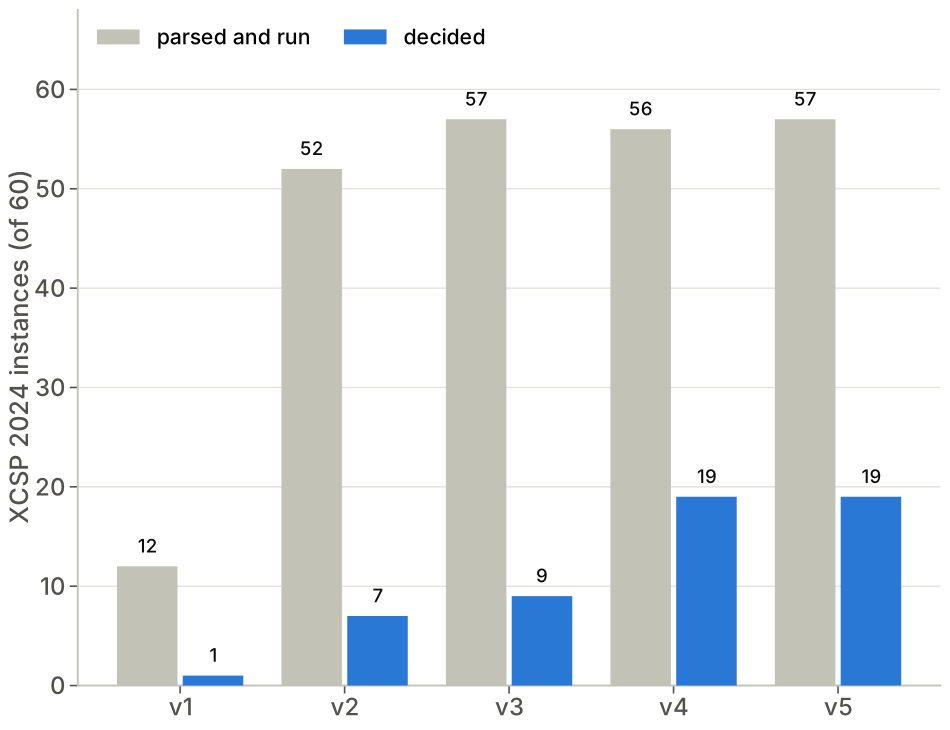
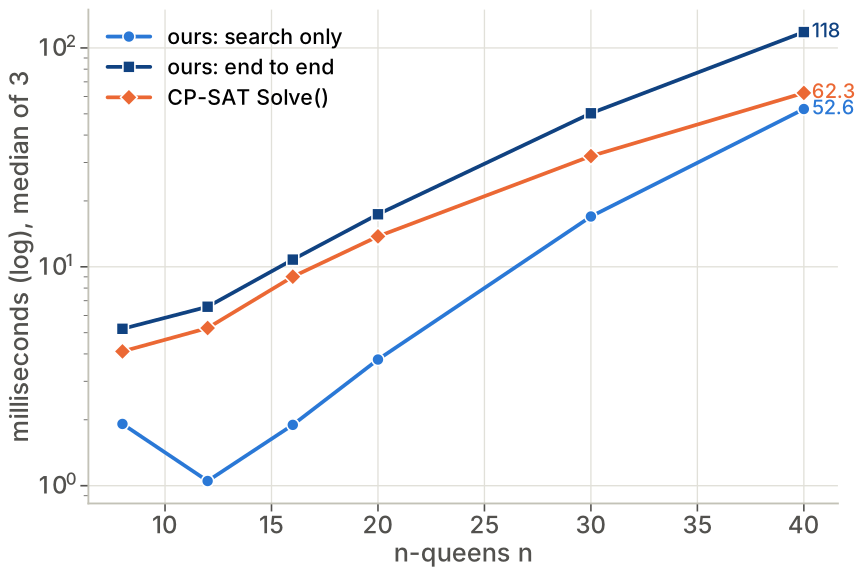
- Scheduling 39/1/0; proved 39 vs 20
- Every n = 20 and 24 instance proved by us in < 0.1 s, none by CP-SAT
- Queens: faster search, slower end-to-end (Python model translation)
More garmo solvers benchmark results
- Proof-Carrying Max-Cut on a GH200: 67 Biq Mac Optima Proved vs HiGHS's 49
- Weighted MaxSAT on a GH200: From 14/33/50 to 33/38/26 Against NuWLS-c-IBR
- Large-Instance TSP on 16 Arm Cores: 0.692 % → 0.165 % Mean Gap, Still Behind LKH-3
- A Native QCDCL Solver vs DepQBF: From 0 vs 4 to a 15–15 Tie, Then 15 vs 18 on Fresh Instances
- Vehicle Routing vs PyVRP: a C++ Iterated Local Search Wins 37/26/21 at Equal Budget
- ISPD98 Bisection: a Multilevel FM + Flow Engine Beats KaHyPar and mt-KaHyPar at Equal Budget
- An Evidence-Driven Solver Router: Regret 0.046 vs 0.190 for the Best Single Backend
- A Verified MIP Race: HiGHS, SCIP and GPU Primal Heuristics Against cuOpt on MIPLIB 2017
- Certified GPU Numerics: Every Answer Carries a Checkable Certificate: and Where It Costs
- LABS on a GH200: Exponent 1.24 to the Proven Optimum, Beside the QAOA Exponents
- UNISOLVE 0.16.1: One Solver Platform, 13 Problem Domains, Every Answer Checked
- Four Certified Builds: Toroidal Proofs, Unroutability Certificates, CertBQP and a 235× Batch Service